Showing posts with label loaded question. Show all posts

Monday, September 15, 2014

Would you be more likely or less likely to vote for John McCain for president if you knew he had fathered an illegitimate black child?


A Loaded Question occurs when someone asks a question that contains a number of unspoken assumptions. The tricky part is that it is very difficult to respond to that question without tacitly accepting the assumptions that are buried in that question. The most famous example is, "When did you stop beating your wife?" One cannot really respond to this question without accidentally admitting that one has a history of spousal abuse. Examples like this can be quite amusing, but we should never forget that people have often exploited these fallacies for their own gain.

Perhaps the most dramatic example of this is an electoral tactic known as Push Polling. The way it works is that in a contested election, one side will employ people to call up likely voters in the guise of conducting an electoral poll. These "pollsters" will then ask a series of Loaded Question in the guise of collecting polling data. These questions will often imply that the candidate being asked about is guilty of some scandal with the hope that the people who are being asked these questions will assume that the scandal must be real, otherwise why would the "pollster" be asking about it?

Push Polls were a favorite electoral dirty trick of George W. Bush, and he employed them several times both when running for Governor of Texas as well as when he ran for President. The most famous and well-documented instance of this was during the 2000 Republican Primary in South Carolina. This primary came early in the season, and up to this point John McCain had been making all the headlines and winning the few primaries and caucuses that had been held up to that point. Recognizing that his campaign was in trouble, George W. Bush (or more accurately his campaign advisors) decided to use a push polling technique, and began calling likely voters in South Carolina under the guise of conducting a poll. These voters were asked a number of questions including, "Would you be more likely or less likely to vote for John McCain for president if you knew he had fathered an illegitimate black child?"

This is a great example of a Loaded Question. The question clearly implies that McCain has fathered an illegitimate black child, but it doesn't actually accuse him of doing that. It merely suggests it. This suggestion is further bolstered by images such as the one at the top of this post, which show the McCain family with, apparently, a black member. The individual is, in fact, McCain's adopted daughter Bridget, and the story of her adoption is actually quite touching, and reflects well on McCain and his family.

However, at the time, these smears, taking the form of loaded questions delivered by push poll were strong enough to derail the McCain campaign (which says something about the values of the primary voters in South Carolina), and he went on to lose the primary to George W. Bush who was subsequently elected president. 

I do not relate this story to criticize Bush or to praise McCain, but instead to show why it is so important to study and think about these fallacies. We study these fallacies because they are out there everywhere, and these fallacies are out there everywhere because they work. If we don't work hard to recognize them and call them out when we see them, we allow them to work and we allow others to be deceived. And this isn't good for anybody.

Tuesday, August 20, 2013

JAQing Off

Today I would like to talk about a special version of the Loaded Question fallacy, one which some commentators have taken to calling JAQing Off. This fallacy was coined by a message board commentator at the JREF forums and is defined as:
1. the act of spouting accusations while cowardly hiding behind the claim of "just asking questions." 2. asking questions and ignoring the answers.
This is a favorite tactic of many political commentators, with Glenn Beck and Rush Limbaugh being two of the most notorious practitioners. The idea is that one asks a bunch of leading questions, perhaps with a suspicious or conspiratorial tone, all intended to imply that there is something seriously wrong. There is never any positive argument given, just innuendo. Then, when the person is challenged on his assertions, he is able to fall back on the statement, "I'm just asking questions." As is often the case, the fine folks at South Park give us the clearest articulation of this issue:


Now let me be clear, asking questions is one of the best ways to increase one's knowledge and understanding of the world and there is nothing wrong with asking lots of questions (even very nitpicky ones). My classes are most interesting when the students ask lots of questions and challenge the claims I make. The problem with JAQing off is that one isn't asking questions in order to learn more about a topic. Instead, one is asking lots of questions in order to imply that there is something wrong or to make a nasty claim about a person. The key difference is that when one is JAQing off, one doesn't really care about the answer to the questions asked. The person JAQing off is not trying to learn anything about the world, and will likely ignore the answers given. Again, this is because JAQing off isn't about inquiry, it is about satisfying one's own desires to smear and attack others without being held accountable for one's actions.

Thursday, November 15, 2012

Electoral Denialism on the Left: The Case of Proposition 37

This will be a long one. Though I have written many posts in the past few days looking at Right-Wing denialism regarding the election, I want to pivot a bit and look at some denialism from the Left. In particular, I want to focus on a series of articles written by Jon Rappoport and posted at NaturalNews.com which claim that the election results for Proposition 37 (a proposition that would have mandated labeling of food with GMO ingredients) in California have been fixed. The articles in question can be found here and here, and I intend to unpack them in some detail because they are a treasure-trove of factual errors, fallacious reasoning and conspiracy mongering, and they reveal how a failure to think critically can lead someone to make some rather absurd and nonsensical claims.

Friday, July 20, 2012

Bain or Bane Part Deux: Plausible Deniability

In an earlier post, I noted how Rush Limbaugh was using a Loaded Question to imply a conspiracy between the Obama Administration and Hollywood to link Mitt Romney and his private equity firm Bain Capital with the villain of the new Batman film, Bane. Rush Limbaugh has since walked back this claim saying:
I never said that the villain was created by the comic book character creator to be part of the 2012 campaign. I never said that at all. Everybody's out there running around saying I got this giant conspiracy theory that the Batman people, the creators, the comic book creators, created this thing to campaign against Romney. I never said that. I didn't say there was a conspiracy. I said the Democrats were going to use it, which they are. Jon Stewart's harping on it.
Aside from a bit of straw manning, Limbaugh is technically correct. He never directly asserted that there was a conspiracy, he merely implied it via the questions he was asking. And this brings up an important point about the effectiveness of loaded questions. One can ask as many loaded questions as one wants, but as soon as one is challenged on the assumptions underlying those questions, one can merely respond by saying that he never assumed anything, he was merely asking questions. This is why loaded questions are such an effective rhetorical strategy, they give the questioner plausible deniability if he or she is ever challenged on the assertions underlying those questions.

As is often the case, South Park provides a perfect encapsulation of this point:

Wednesday, July 18, 2012

Bain or Bane

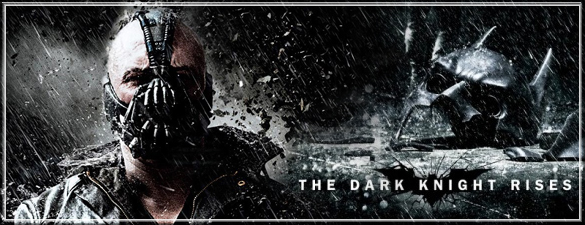
Dark Knight Rises Advertisement featuring the villain Bane

When I first started writing this blog, I knew eventually I would be talking about Rush Limbaugh. I don't listen to his show, but he is such an influential political personality that it he is impossible to avoid. I am fine with this as I know Limbaugh is a great source for fallacies and rhetorical errors. 

Well, the time has finally come as Rush Limbaugh has been discussing the latest manufactroversy (manufactured or made-up controversy) concerning the similarities between the name of the villain in the latest Batman film, Bane, and Presidential Candidate Mitt Romney's former private equity firm Bain Capital:
Have you heard this new movie, the Batman movie, what is it, The Dark Knight Lights Up or whatever the name is. That's right, Dark Knight Rises, Lights Up, same thing. Do you know the name of the villain in this movie? Bane. The villain in The Dark Knight Rises is named Bane, B-a-n-e. What is the name of the venture capital firm that Romney ran and around which there's now this make-believe controversy? Bain. The movie has been in the works for a long time. The release date's been known, summer 2012 for a long time. Do you think that it is accidental that the name of the really vicious fire-breathing four-eyed whatever-it-is villain in this movie is named Bain?
Let's unpack the fallacies. First, there is a very nice Loaded Question in the last sentence, with Limbaugh at least hinting at the possibility of some conspiracy or collusion between the Obama campaign and the makers of the film. As many have noted the possibility of any kind of collusion here is nonsensical. The character of Bane was created in 1993, and the film began principle photography over a year ago working from a script that had been in development from at least 2008. The idea that there was some grand conspiracy or collusion among the Obama campaign and Hollywood simply boggles the mind. At best, it seems we have a coincidence: the film happens to be coming out at the same time that the Obama campaign is going after Mitt Romney's tenure at Bain Capital.

And this brings me to the next fallacy we can identify here, the False Analogy. To be fair to Limbaugh, he isn't really making a false analogy himself, merely discussing a false analogy made by other commentators, primarily the Democratic strategist Christopher Lehane, who appears to be the first to link Bane with Bain. That this connection is a false analogy should be obvious.

h/t to the Sean O'Neil

Friday, July 13, 2012

Tinkerbell Science and the Higgs boson.

Sometimes an argument is so bad that it can be difficult to identify a specific fallacy. One reads the argument and knows it is nonsense, but it can be difficult to articulate exactly why. This is where the Non Sequitur and Missing the Point Fallacy come in handy. These are both essentially catch-all labels for fallacies in which the conclusion clearly doesn't follow from the premises, but where one can't be more specific (in some sense all fallacies are non sequiturs, but specificity is always to be preferred to vagueness whenever possible). As a case in point, see this article, again from Mike Adams on the Higgs boson.

To summarize, Adams essentially suggest that the Higgs boson was discovered because a bunch of scientists wished hard enough. That is, because they concentrated so hard on wanting the Higgs boson to be discovered, those conscious intentions brought it into being. Lest one think I am straw manning Adams, read the article for yourself, but here is one particularly representative quote:
CERN may not have discovered a new particle, it turns out, but may have inadvertently proven the power of mind-matter interaction.
Adams uses a great deal of weasel words like "may" but the general point should be pretty clear, the Higgs boson exists because scientists wished hard enough (Why I am calling this Tinkerbell science should be clear, if not this should explain it).

So, this is the claim, what is the argument? Adam's writes:
In other words, was the Higgs discovery actually the greatest intention experiment ever conducted? This is not a casual question. It reaches into the very nature of science itself and begs the question: Can human-run science ever truly be conducted independent from an observer? The answer, of course, is no. The subsequent question then becomes critical: Do observers alter the outcomes of scientific experiments even without any intention of doing so?
There are a great number of fallacies packed into this passage. First, the final sentence and the other rhetorical questions are clearly examples of Loaded Questions since they all assume the conclusion Adams is trying to make.  In addition, this is a good example of a Non Sequitur because the conclusion doesn't follow from the premises, and in effect reflects a significant misunderstanding of the scientific process (Missing the Point of science). The argument seems to be:
  1. Science is done by human beings. 
  2. Human beings are incapable of being completely objective. 
  3. Therefore everything they do is radically subjective. 
  4. Therefore there is no objective reality.
Now there is a kernel of truth in what Adams writes. Science is conducted by scientists, scientists are human, and thus subject to all the errors and biases normal human beings commit. However, to then go on and argue that there is no objective reality and because of this wishing really hard brings something into existence simply goes too far. There just isn't enough evidence to draw such a radical conclusion from what we are presented. In addition, things like the scientific method and peer review exist exactly to avoid the subjectivity of scientific conclusions. We certainly can't trust what CERN says just because they say it, and this is why all their research is made publicly available so that other scientists (many of whom do not care whether or not CERN is correct and who may in fact strongly wish that it is incorrect) can evaluate the evidence and conclusions. It is not a perfect method, but it is really the best method we have, and is far preferable to the Tinkerbell science Adams seems to be supporting.

Monday, July 9, 2012

More nonsense about the Higgs Boson

Continuing my discussion of Mike Adams' lengthy post on the implications of the discovery of the Higgs boson, today I want to talk about Loaded Questions (sometimes called Complex Questions). A Loaded Question is a question that is asked in a way that presupposes the truth of some proposition buried in the question. The classic example is, "When did you stop beating your wife?" There is no way to answer this question without implicitly acknowledging that one has a history of spousal abuse. In effect, the only suitable response to this (assuming that one is not, in fact, a spousal abuser) is to reject or reformulate the original question.

Adams provides a very nice example of a loaded question in the last section of his article when he writes:
Then there is the question of the Architect of this reality. Even if humankind manages to decode the fundamental laws which govern the physical universe, there's not only the question of "Who or what created the universe in the first place" but the even more difficult question, "Who or what created the laws of physics that govern the universe?"
The loaded question occurs in the assumption that someone or something was responsible for the creation of the universe or for the creation of the laws of physics that govern it. Now it is certainly a possibility that someone or something created the universe, but there are other legitimate possibilities as well, possibilities that are dismissed by the very formulation of the question. Perhaps the universe came into existence ex nihilo (from nothing), or perhaps the universe has always existed and always will exist such that it was never created. Adams dismisses these other possibilities writing, "This is a strange argument of "effect without a cause," and it simply doesn't add up," but he never spells out why it doesn't add up or what is problematic about these claims. This is, perhaps, a version of the argument from ignorance, "I can't understand it so it must be false." However, by formulating his question in the way he does, Adams is definitely guilty of presenting a loaded question because the question assumes the correctness of his preferred answer at the expense of other possible cosmological accounts. We can't really answer Adams question without implicitly endorsing the reality of some divine creator (or 'Architect' in Adam's preferred terminology).

I would like to conclude this post by quickly discussing Adam's argument for the existence of some transcendent creator or architect of the universe:
The reason there is something rather than nothing is because someone (or something) had to put it there, and that means there is an intelligence -- a consciousness -- that exists above and beyond our known universe. Something with the power to create our known universe, in other words.
This is a version of the cosmological argument for God's existence, one of the three major arguments for the existence of God, the classic version of which was first formulated by Aristotle in his Physics. This argument was decisively refuted by David Hume in his Dialogues Concerning Natural Religion. The basic thrust of Hume's response is that one is guilty of employing a loaded question when one makes this sort of argument. That is, as I noted above, to ask who or what created the universe is to assume that there had to be such a creator, when in fact it is equally reasonable to believe that there isn't one. Hume is a much better writer and philosopher than I am, so take a look at the links above for more details and analysis.